Sedona's Spookiest Places: Trails With Strange Names and Stranger Stories
Devil's Kitchen, Robbers Roost, Chicken Point: the true stories behind Sedona's strangest trail names.
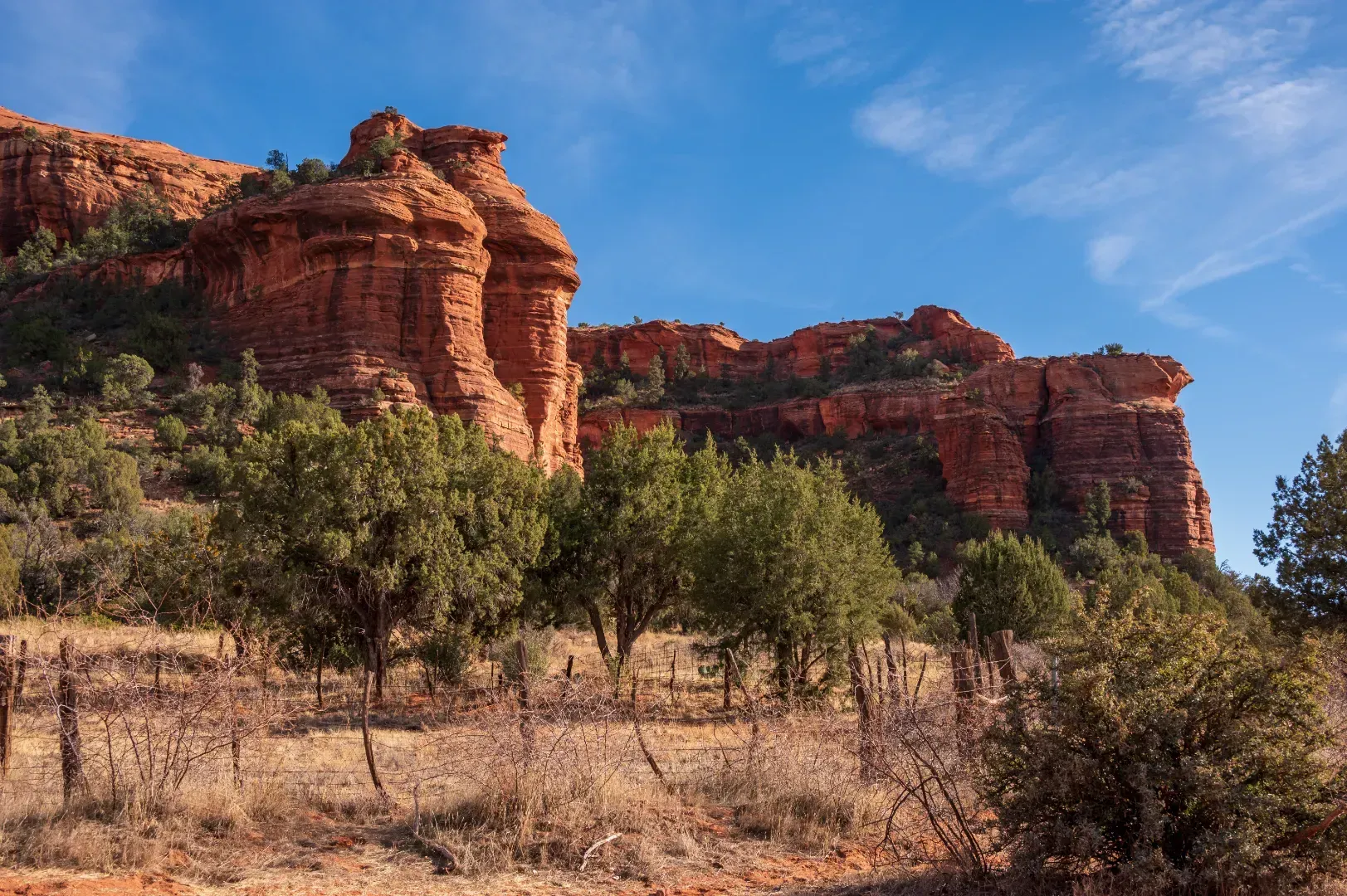
Sedona's trail map reads like a dare. Devil's Kitchen. Devil's Dining Room. Robbers Roost. Chicken Point. Some of those names come with a real story, some come with a legend nobody has ever proven, and one comes from a Jimmy Stewart movie. Here is what is behind each name, which parts are documented, and how to see them yourself this fall.
Devil's Kitchen: The Place Where the Ground Fell In
Devil's Kitchen is the best-documented weird place in Sedona, and it is real geology, not folklore. It is a sinkhole about a quarter mile up the Soldier Pass Trail, and it is the most active of the seven large sinkholes around the city.
It has collapsed more than once. The first recorded collapse came in the early 1880s, and accounts say the crash carried across the valley and dust hung in the air all day. It gave way again in 1989 and in 1995. Geologists expect it to keep changing, and nobody can say when.
Why it happens: water slowly dissolves caves in the Redwall Limestone, more than 600 feet down, and the ground above eventually sags into them.
How to visit: The Soldier Pass trailhead lot is tiny and has been shuttle-only on busy days. Stand well back from the rim. Sandstone overhangs at Sedona's sinkholes can give way without warning.
Devil's Dining Room: The Other Sinkhole
Devil's Kitchen has a sibling. The Devil's Dining Room is a fenced sinkhole near the start of the Broken Arrow Trail, around 90 feet deep. You cannot see the bottom from the overlook, which somehow makes it creepier. Stay outside the fence.
Soldier Pass: A Name With a Military Past (Mostly)
The trail's name is usually credited to U.S. Army troops who camped and traveled through the area during the Apache campaigns of the early 1870s under General George Crook. Some local sources say it more loosely, pointing to soldiers moving to and from Fort Verde. Treat the Crook detail as strong tradition rather than a single documented record.
Broken Arrow and Chicken Point: Hollywood and Jeep Dares
Broken Arrow comes from the 1950 Western Broken Arrow starring James Stewart, which filmed scenes in this part of Sedona. The movie is also noted as one of the first postwar Westerns to portray Native Americans more fairly.
Chicken Point, the overlook at the end of the trail, has a less dignified origin. Jeep drivers used to loop around a rock knob near a steep drop, and anyone who backed out got called chicken. That is the story guides tell, and nobody has a better one.
How to visit: The Broken Arrow Trail is about 3.4 miles round trip to Chicken Point. You can also ride it on a jeep tour; Pink Jeep says it is the only outfitter permitted on this trail.
Robbers Roost: The Outlaw Legend Nobody Has Proven
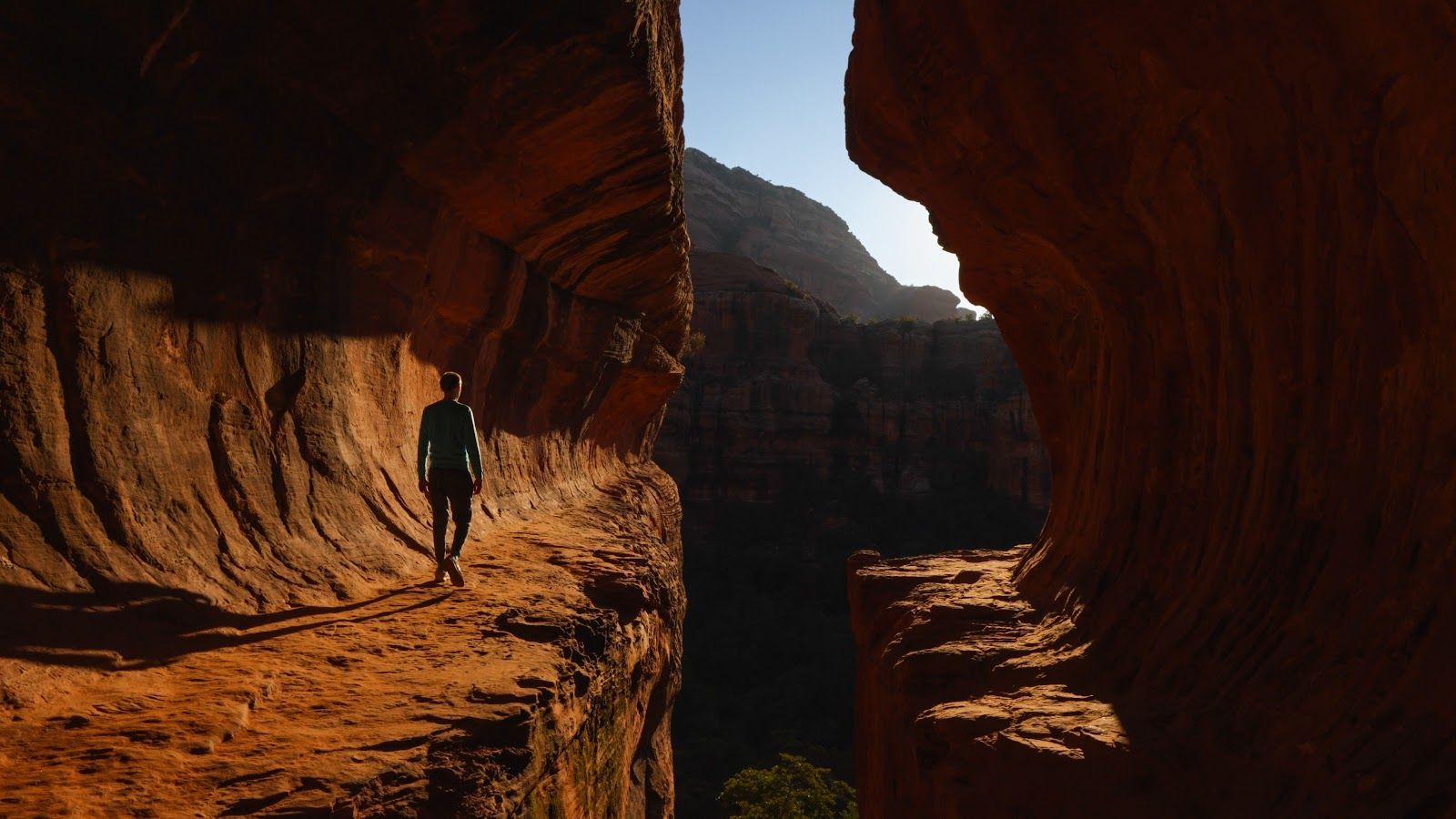
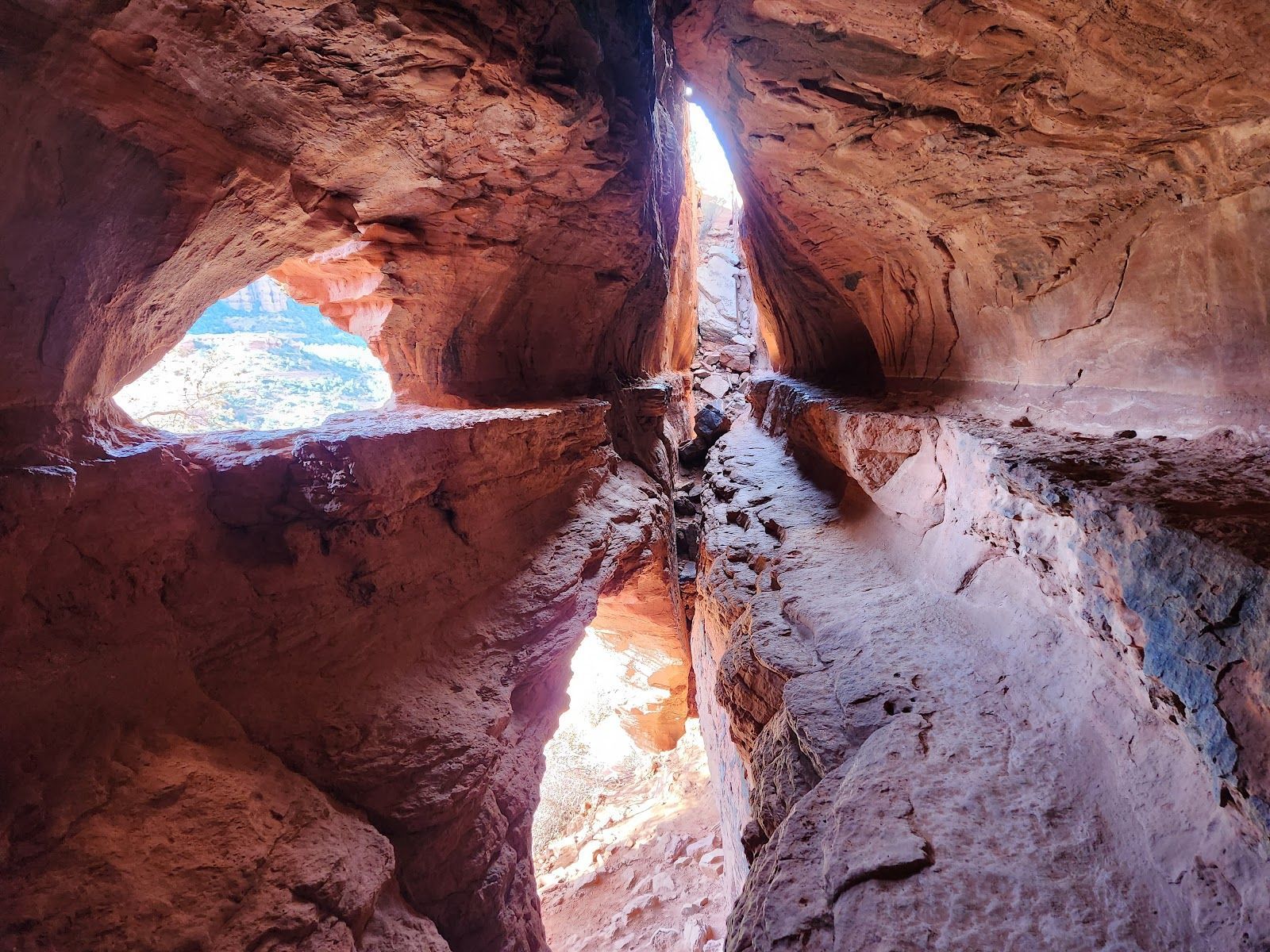
Robbers Roost is a big alcove cave northwest of Sedona, also called Shaman's Cave or the Hide Out Cave. Local legend says bandits and bootleggers used it as a hideout, which is where the name comes from.
Here is the honest part: that has never been proven. What is true is that the cave is remote, has long views over the forest, and would make an excellent lair. The hike itself is short, about 0.4 miles one way, but steep and rocky, and you reach it by a dirt forest road.
Devil's Bridge: The Scariest Name With the Least Story
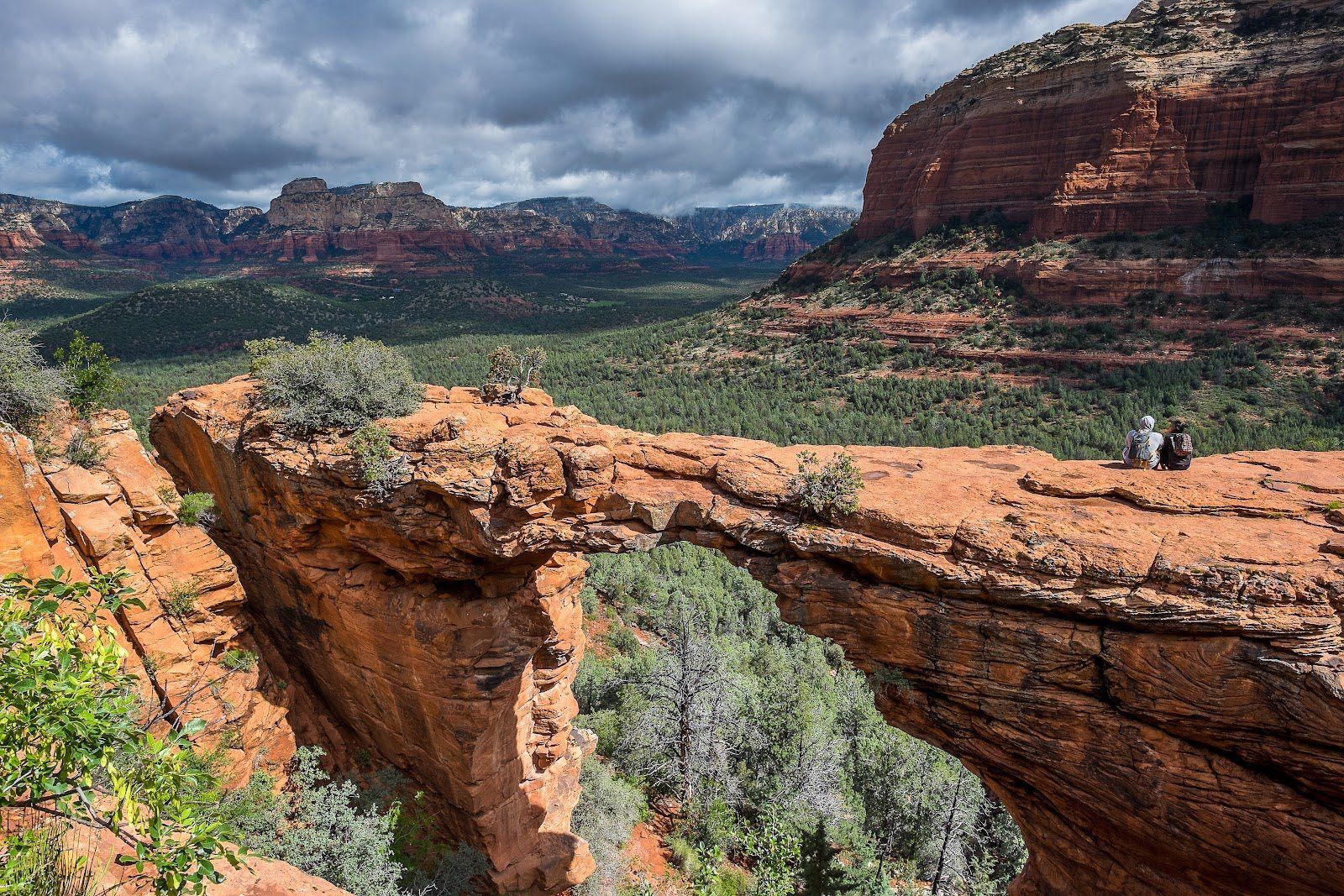
Devil's Bridge is Sedona's most famous arch and its most searched hike. You would expect a dark legend behind a name like that. We looked and could not find a sourced one. Sometimes a devil is just a devil. Go for the view, and go early.
Boynton Canyon: The Most Important Story on This List
Boynton Canyon is not spooky, and it does not belong in a Halloween roundup the way the others do. It is here because it has the deepest story of any place in Sedona. The Yavapai-Apache Nation holds the canyon sacred as the place tied to their First Woman, and tribal members still hold ceremonies there. One tribal historian has described having to walk through a resort golf course to reach the site.
Visit it the way you would visit any sacred place. Stay on the trail, keep quiet, and leave cliff dwellings and artifacts exactly where they are. For more on the canyon's spiritual reputation, see our guide to Sedona vortex sites.
How to Explore Sedona's Strange-Name Trails Safely
- Start early. Soldier Pass and Broken Arrow fill fast, especially on fall weekends.
- Carry a Red Rock Pass where required, or check whether your trailhead is shuttle-served.
- Respect sinkhole edges. Fences and warning signs are there for a reason.
- Plan around the light. Fall days are shorter, and you want to be off rocky trails before dark.
Want the ghost stories to go with the trails? Read is Sedona haunted? and our look at strange lights over Sedona.
Your Basecamp for Sedona's Stranger Side
Most of these trailheads are a short drive from Uptown, and Dreamcatcher Inn is walkable to Uptown. Hit Devil's Kitchen at sunrise, come back for breakfast in town, and save Broken Arrow for another day. Our rooms and suites make an easy base for a few days of strange-name trail hunting, and longer stays give you room to fit in the less obvious ones like Robbers Roost.